


AI Search is not an SEO reset - and Perplexity is not Google
If you click through SEO articles, LinkedIn posts and conference slides, you quickly get the impression that we are facing a major reset: Google is practically finished, rankings have had their day and anyone who does not optimise for Perplexity, ChatGPT, Gemini, Claude or other AI search engines today has not understood SEO.
That sounds modern and it sells well. But it is one thing above all: exaggerated. So in this blog article, I'll briefly outline my critical view.
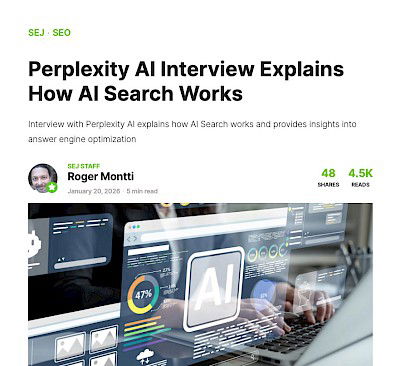
The interview with Perplexity AI, which is currently receiving a lot of attention, is undoubtedly exciting. It provides insights into how AI-based search works, how content is processed and why traditional search results are increasingly being replaced by answers. The problem is not the content of the interview - the problem is what many people make of it.
Because future direction and market reality are being cheerfully confused here.
Perplexity shows where the journey is heading - Google decides who drives
The interview with Perplexity AI is interesting because it reveals how modern AI systems utilise information: Content is broken down into small units, contextually evaluated and played out differently depending on the user. This is technologically impressive and strategically relevant.
But perplexity is not a mass phenomenon. Not a traffic driver. It is not a system that decides whether a company is visible or not. This power still lies with Google - and it will remain so for the foreseeable future.
Anyone who pretends that Google can be replaced by "AI Search" in the SEO strategy is confusing the field of experimentation with market power.
Rankings are not dead - they are the ticket
One of the most dangerous shortcuts in the current debate is that if AI provides answers, there will be no need for rankings. The opposite is true.
AI systems do not access "the internet", but pre-filtered, rated content. And this pre-selection is still based on exactly the same mechanisms that we have known for years: Indexing, relevance, authority, trust.
If you are not visible on Google, you will not appear in AI responses. If you don't rank, you won't be cited. Rankings are no longer the goal - but they are still the prerequisite.
The real problem is older than AI
What the Perplexity interview shows above all is something that many in the SEO industry don't like to hear: Much of the content has always been mediocre. Too long, too vague, too focused on keywords and not optimised enough for intent and real questions.
AI only makes this problem more visible.
A text that doesn't give a clear answer, doesn't have a point of view and doesn't provide any real added value is difficult for an AI system to utilise. And to be honest, it was rarely really helpful for users either - optimisation for Google through the crowbar with link building and content optimisation at a purely term level only concealed this better for a long time.
AI Search does not require new SEO - but better SEO
What is really changing is not the discipline of SEO, but the demand for proper craftsmanship. Content needs to be clearer, more structured and easier to understand. It must answer questions instead of circling around them. You need to show why someone knows what they are talking about.
This is not "AI SEO". This is what Google has been demanding for years - and what many have ignored for too long.
My conclusion
Perplexity is not a game changer for SEO. It is an early indicator. A mirror that shows how merciless systems become when content has no real core.
Anyone who frantically starts optimising specifically for AI is chasing the wrong shortcut. Those who instead start to provide better answers for Google, build clear content along the user intent and make real expertise visible will automatically appear in AI Overviews, Gemini, ChatGPT, Claude and also at Perplexity. Not because it tricks AI. It's because he's finally doing good SEO and focussing on the player with the highest potential: Google.
And maybe that's the uncomfortable truth behind all the AI hype.
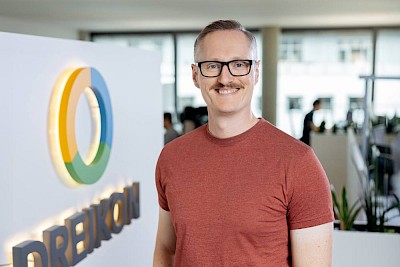
About the author Matthias Kampmann
Matthias Kampmann is a partner and managing director of the digital agency DREIKON. With over 20 years of experience in search engine optimisation and more than 15 years of expertise in Google Ads, he advises companies strategically on SEO, GEO and sustainable online marketing.