


Will we still need Google in the future?
"Google is dead." "SEO has had its day." "In the future, everything will run via ChatGPT."
Statements like these are currently omnipresent - and exactly the problem.
Because anyone who now believes that Google no longer plays a role is making one of the most dangerous marketing decisions of the next few years.
This quickly leads to the conclusion that Google will lose importance - or even be completely replaced. However, this assumption falls short. If you do the wrong thing in the GEO age, you risk complete digital invisibility in the near future - in Google and in AI systems.
The real danger: AI as an excuse for poor SEO
A development can currently be observed in many companies that appears innovative at first glance, but in reality reveals a structural problem: AI is seen as a shortcut.
Instead of building up content properly, systematically penetrating topics and developing visibility in the long term, the hope is that AI will take over this work in the future. The idea is that if answers are generated directly, classic search engine optimisation is no longer needed. This is precisely the fallacy.
And if you're wondering whether you'll still need a website in 2026, you'll find the answer here. Our spoiler: YES! Many new tools such as chatbots or apps continue to access content from the internet in the background - they often just display it differently.
The most important facts in brief
- AI does not replace Google - it uses content that is already visible on the web
- Without a good SEO foundation, you won't be visible in Google or AI systems
- Ranking ensures findability, coverage ensures mentions in AI responses
- AI reinforces good SEO - it makes bad SEO visible for good
- Today, content must not only rank, but also be citable
- Those who do not optimise holistically now will lose visibility in the long term
The new reality: two levels of visibility It's not Google vs ChatGPT, it's Google AND ChatGPT
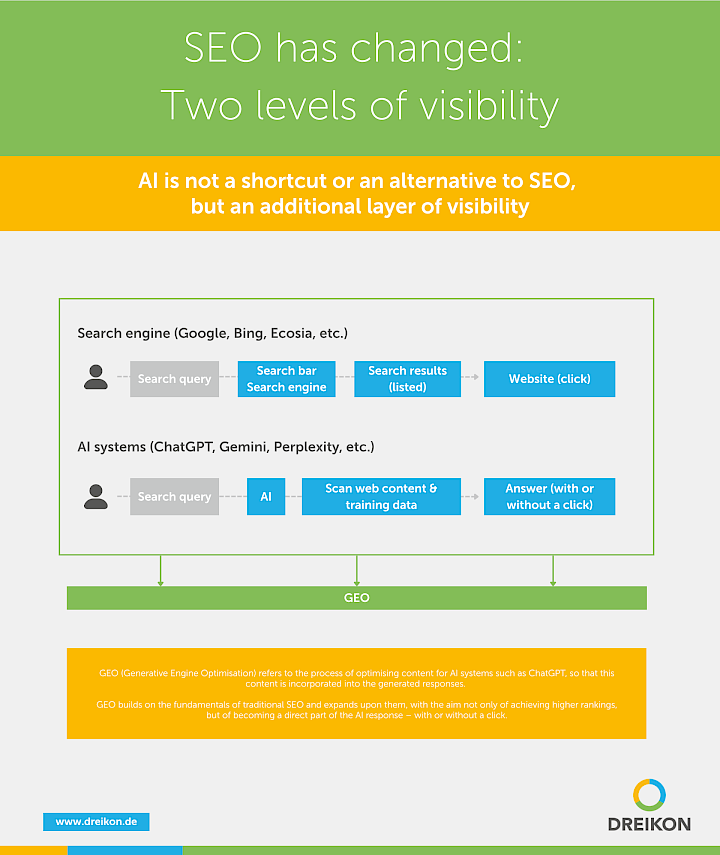
The user journey has changed. Whereas in the past the path was clearly via search engines, today an additional layer is created by AI, which manifests itself in the following user behaviour:
- Previously: user → Google → website (click)
- Today: User → AI → prepared content (web content & training data) → response (NEW: with or without click)
This development does not mean that one level is being eliminated, but that another is being added. Content must therefore not only be findable, but also processable.
Google shows where the answer is.
AI gives you the answer.
The central error in thinking
Equating AI systems with search engines is one of the most common misconceptions in the current debate. The quality of the answers depends directly on the quality of the underlying content.
In practice, this means that AI generates answers but uses existing content that has previously been structured, evaluated and made findable. Google continues to fulfil precisely this function. Google is therefore less of a pure traffic channel and more of an infrastructure for evaluating and organising information. This makes it clear: AI reinforces good SEO - it does not replace it.
What this means for companies
Companies that do not establish a clean content basis today will not only rank lower in the future, but will also appear less frequently in AI responses. Visibility shifts - it does not disappear.
In this sense, the current development is not a break, but rather a final warning shot. The demands on content are increasing, not decreasing. Topics must be considered holistically, structured clearly and presented in a technically sound manner.
👉 Anyone who has done SEO half-heartedly so far will become invisible for good with AI.
👉 Those who do it right will win twice - in Google and in AI systems.
👉 Those who don't act now will leave their own visibility to the competition in the long term.

Your competitors are already one step ahead.
It builds content that is found and cited - while you are still thinking. AI mercilessly sorts out what is relevant - and what is not. If your content doesn't fit in, you will disappear from view permanently. Act now - before there's no turning back
Why AI doesn't work without Google
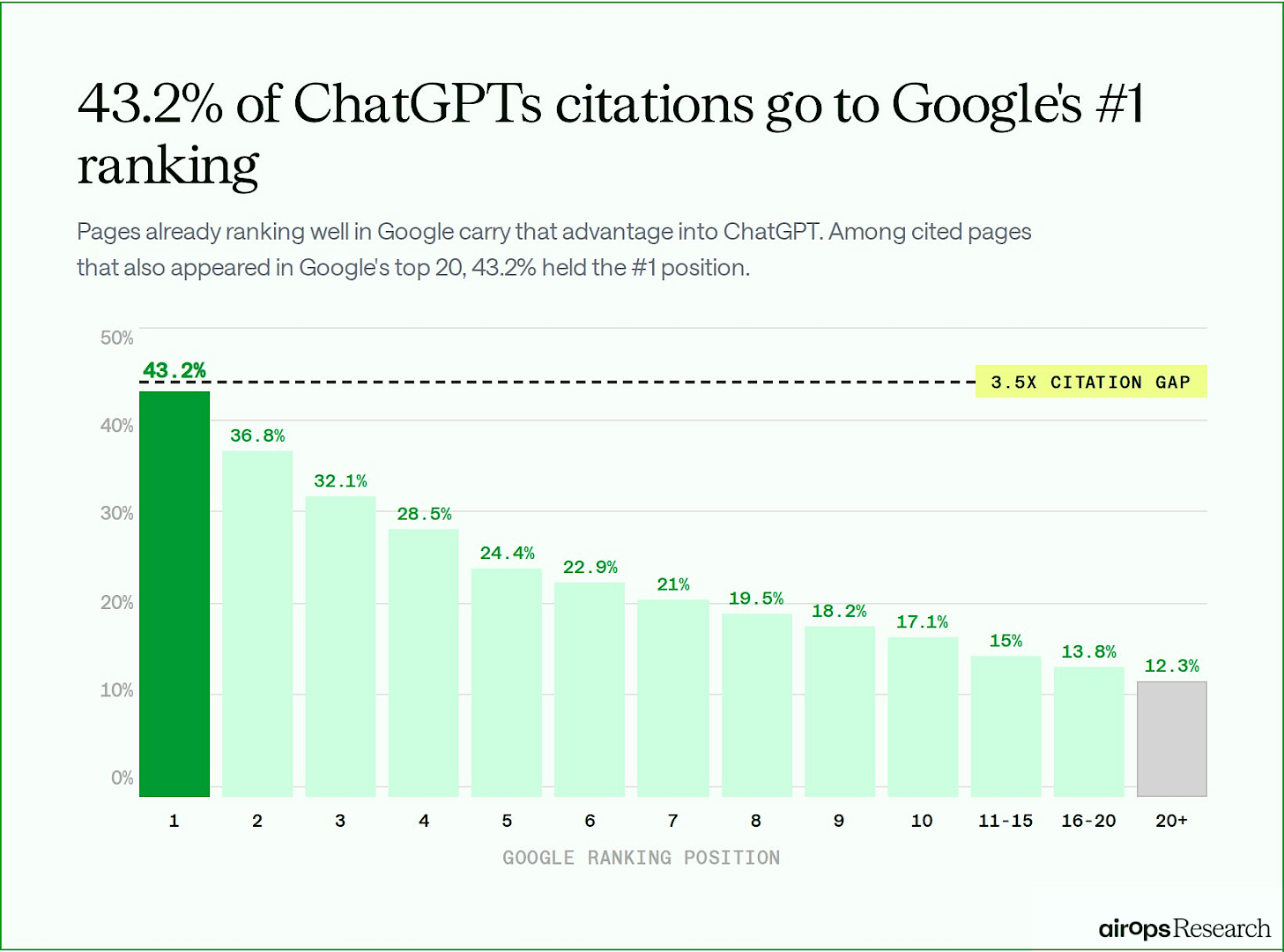
Even though AI systems are increasingly working independently, in many cases they are dependent on existing content. This content often comes from sources that are already visible in traditional search systems. Several factors play a role here:
- Content must exist in the first place
- it must be findable and indexable
- it must be categorised as relevant
- it must be frequently referenced or cited
If this foundation is missing, the probability of being considered in AI-generated responses is significantly reduced. Or to put it another way: visibility does not only arise in AI, but much earlier.
"Ranking decides whether you get into the game. Coverage decides whether you are cited."
Ranking vs. coverage - a new understanding of visibility
With the increasing spread of AI systems, the focus in online marketing is shifting. Visibility no longer only means ranking, but also presence in the AI database.
This creates a second level of visibility. While ranking continues to determine whether content can be found, coverage determines whether this content is picked up and processed by AI systems.
Google vs. AI systems: Two different logics
| Aspect | AI-Systems | |
|---|---|---|
How it works | searches the internet and sorts through pages | uses existing content to formulate answers |
Objective | display relevant websites | provide a direct answer |
Principle | evaluates websites based on quality and relevance | uses training data and found content as context |
Result | Search results page: list of links | ready-made, summarised answer in the chatbot |
Visibility | Users click on the website | the content is mentioned in answers (citations) |
AI Search changes the rules of the game, not the fundamentals
The idea that a complete reboot of SEO will take place with AI persists. In fact, many well-known factors (e.g. EEAT) remain relevant. These include, among others
- content quality
- thematic authority
- trust and credibility
- clear structuring of content
What is changing is not so much the basis, but the utilisation. Content is more frequently processed, summarised and quoted directly instead of being consumed exclusively via clicks.
Conclusion: If you think you no longer need Google, you've already lost the game
Google is not disappearing - but its role is changing fundamentally. Google is no longer just a channel for traffic, but a central basis for digital visibility overall. Content that is not present there has a much harder time being considered in AI systems.
The crucial question is therefore not whether Google is still needed, but how classic search engine optimisation and new AI requirements can be combined in a meaningful way. Because the future does not lie in the decision between Google or AI - but in the ability to operate both systems simultaneously.
Sources
- WordLift: Generative Engine Optimisation & AI Memory Layer
- Artur Kosch (LinkedIn): Ranking vs. coverage
- Own analysis & industry observation (2025-2026)

Find out how visible you really are.
In a non-binding initial consultation, we work with you to analyse the status quo of your visibility in search engines such as Google and AIs such as ChatGPT. We will advise you honestly, transparently and as equals on how critical your situation is and what suitable measures could look like.










About the author Matthias Kampmann
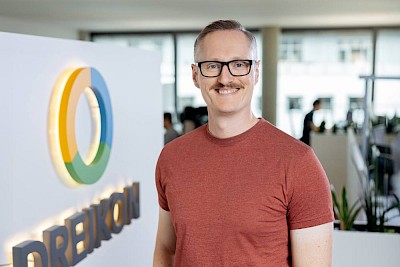
Matthias Kampmann is a partner and managing director of the digital agency DREIKON. With over 20 years of experience in search engine optimisation and more than 15 years of expertise in Google Ads, he advises companies strategically on SEO, GEO and sustainable online marketing.