What will Google be capable of in 2026? Search vs. AI Overview vs. AI Mode vs. Google Gemini
Google is currently undergoing greater change than it has in the past 20 years . Step by step, it is evolving from a search engine that finds websites into a system that answers questions, makes recommendations and helps users make decisions. Anyone looking for information today has more options than ever before: the classic Google search, AI Overviews, AI Mode or AI assistants such as Gemini.
Google’s range of services takes different approaches, which are often confused with one another. It is therefore becoming increasingly important for businesses to understand the role each system plays – and why traditional rankings alone will no longer be enough to remain visible in the future.
Google is evolving from a search engine into an answer engine.
Key points at a glance
- Google is evolving from a search engine into an AI-powered answer engine.
- AI Overviews provide answers directly within the search results, whilst AI Mode turns this into a dialogue-based search experience.
- Gemini is not a search product, but a standalone AI assistant for tasks, analysis and content creation.
- In future, users will not automatically click on search results, but will receive information, recommendations and purchasing guidance directly from AI systems.
- For businesses, it will be crucial not only to be found, but also to be recognised and recommended by AI systems as a relevant source.
- Advertising opportunities within AI systems are being developed across platforms and enable businesses to utilise new advertising formats within AI responses
How do Search, AI Overview, AI Mode and Gemini compare?
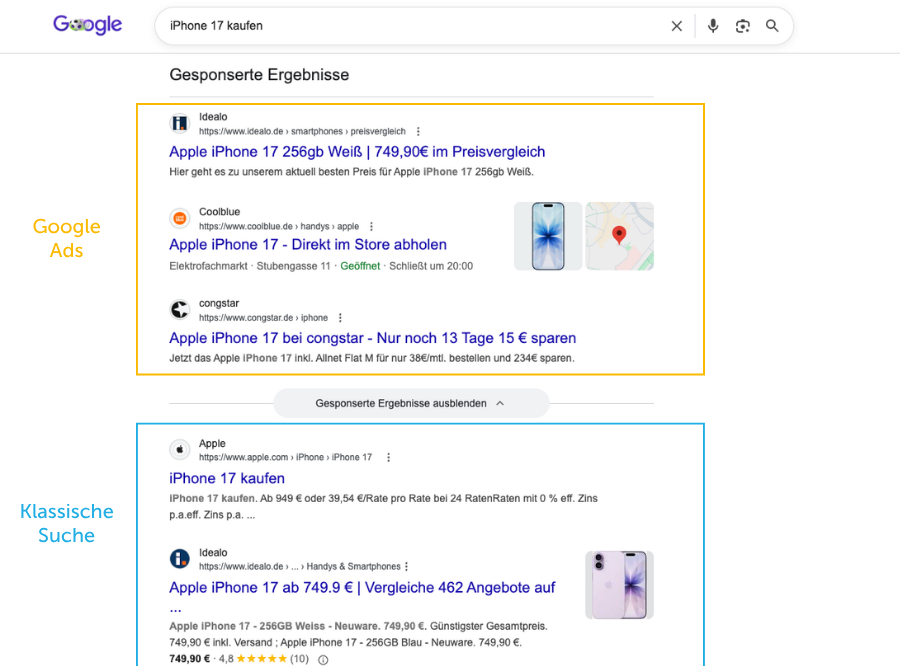
Objective: Finding information
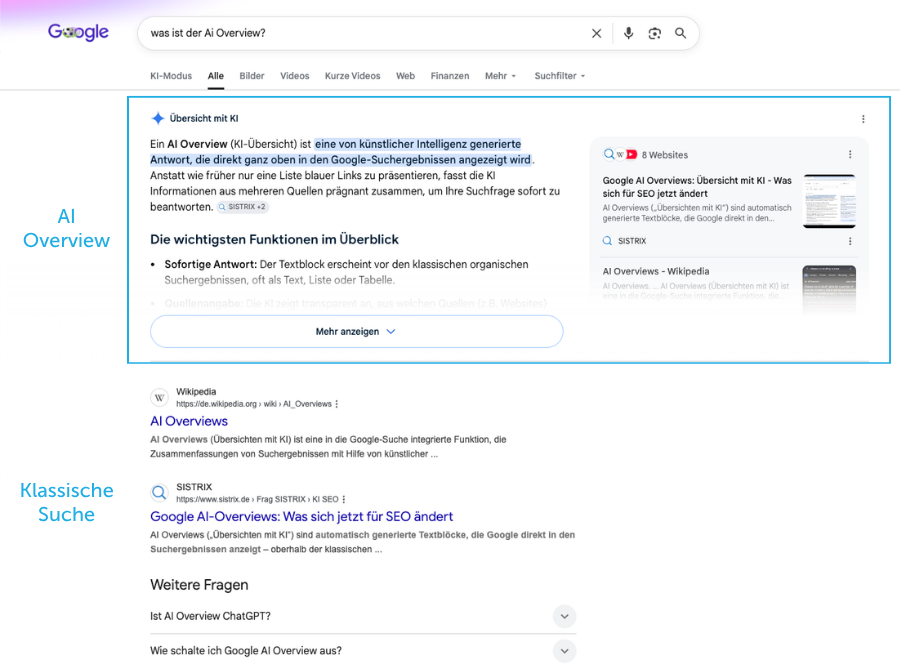
The classic search is particularly suitable when users want to find specific websites, online shops, local providers or particular sources.
Typical use cases:
- finding local businesses
- Checking opening hours
- Visiting specific websites
- Finding products and online shops
- Search for news and the latest information
Examples:
- “SEO agency Münster”
- “Opening hours for a pizzeria in Cologne”
- “LinkedIn login”
- “Buy iPhone 17”
Objective: Understanding information
AI Overviews are an extension of traditional search. They allow you to quickly get an overview without having to open multiple web pages. They summarise information from the SERPs.
Typical use cases:
- Understanding technical terms
- Researching topics
- Comparing pros and cons
- Getting an initial overview
- Grasping the bigger picture
Examples:
- ‘What is Generative Engine Optimisation?’
- “Advantages and disadvantages of heat pumps”
- “SEO vs GEO”
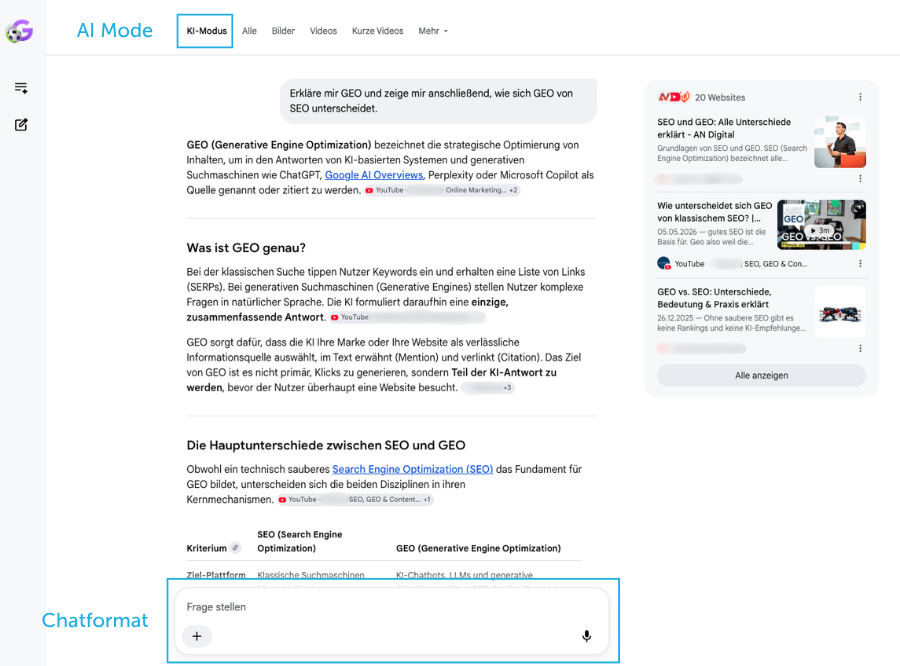
AI Mode supports more complex queries and multi-stage searches (known as ‘query fan-out’). Users can ask follow-up questions and explore topics in greater depth, step by step, in an interactive chat format.
Example: “Explain GEO to me and then show me how GEO differs from SEO.”
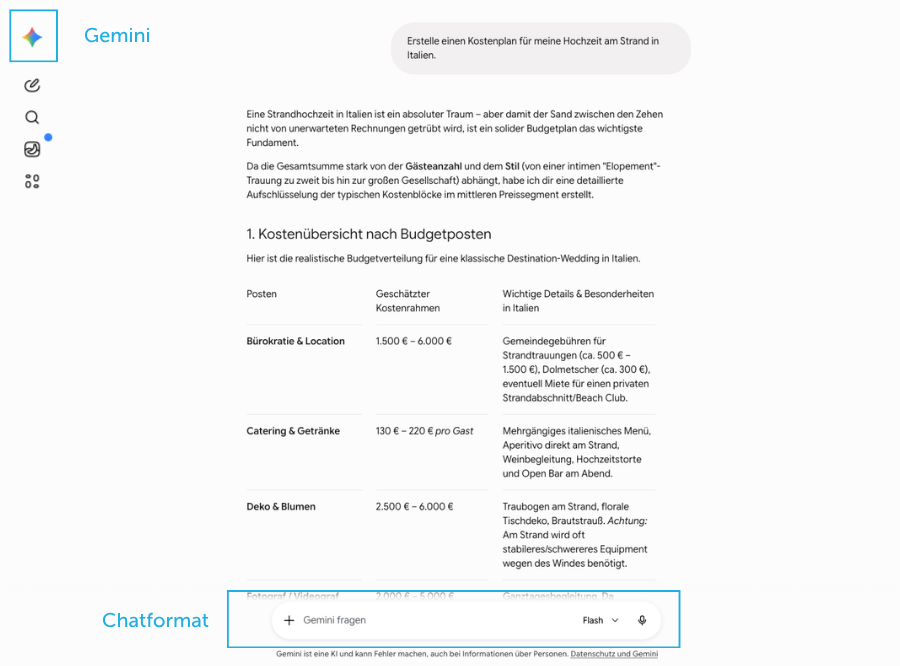
Gemini is not a search result, but a standalone AI assistant. Users can use it to create texts, analyse documents, develop ideas or work on tasks.
Example: “Draw up a budget for my beach wedding in Italy.”

How visible is your business in AI Overviews, AI Mode and Gemini?
Google is fundamentally changing the way we search. Rankings are becoming answers, and search results are becoming recommendations. Companies therefore need to understand how visibility is achieved in AI Overviews, AI Mode and other AI systems. So the most important question is: will your company even be part of the answer? Let us assess your AI visibility now in a no-obligation initial consultation.
Similarities and differences between traditional search, AI Overview, AI Mode and Google Gemini
| Feature | Classic Search | AI Overview | AI Mode | Google Gemini |
|---|---|---|---|---|
Primary function | Find websites | Summarise search queries | AI-powered search | Universal AI assistant |
Output | Search results (SERPs, listed website links) | AI summary + search results | AI answer + follow-up questions | AI-generated responses |
Uses information from the web | ✅ | ✅ | ✅ | ✅ |
Answers user questions | ✅ | ✅ | ✅ | ✅ |
Supports research | ✅ | ✅ | ✅ | ✅ |
Use of AI technologies | Partial | ✅ | ✅ | ✅ |
Supports complex topics | ⚠️ Limited | Partial | ✅ | ✅ |
Natural language support | Partial | ✅ | ✅ | ✅ |
Conversational interaction | ⚠️ No | No | ✅ | ✅ |
Follow-up questions possible | Limited | Limited | ✅ | ✅ |
Focus | Links and sources | Orientation | Research and guidance | Tasks, creativity and productivity |
Search results visible | ✅ | ✅ | Partial | No |
Source citations | ✅ | ✅ | ✅ | ⚠️ Partial |
Typical use case | Information search | Quick overview | Complex research | Working with AI |
Part of Google Search | ✅ | ✅ | ✅ | No |
Relevance for SEO & GEO | ✅ | ✅ | ✅ | ✅ |
Advertising opportunities | Search, Shopping, Display & Video Ads | Search & Shopping Ads within responses | New AI advertising formats in development | ⚠️ No advertising formats currently available |
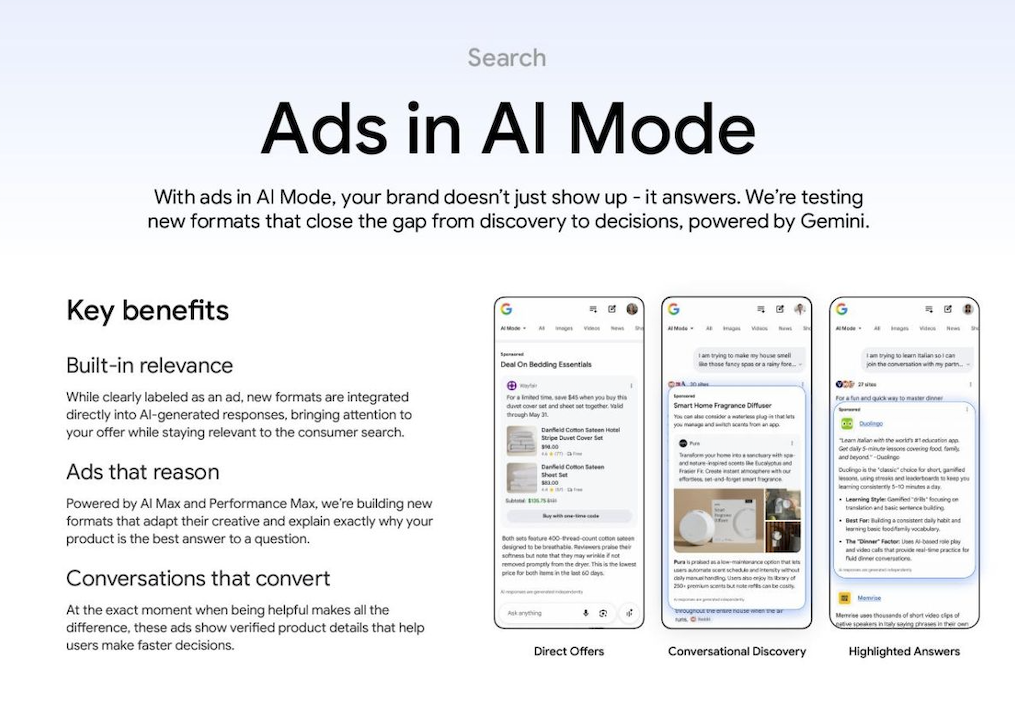
What do these AI developments mean for Google Ads and similar platforms?
Search is increasingly evolving from a list of search results into an environment where users receive direct answers, recommendations and decision-making aids. This also presents new challenges for search engine advertising.
Until now, companies have primarily competed for clicks on adverts and organic search results. In future, it will become increasingly important which brands, products and providers are actually mentioned or recommended within AI-generated answers. For businesses, this means that SEA will not disappear, but will continue to evolve. Alongside traditional ad placement, advertising formats that are directly integrated into AI-generated answers, recommendations and product suggestions are gaining in importance.
This creates new opportunities for advertisers:
- additional advertising space in AI overviews
- new ad formats in AI Mode
- more context-relevant product recommendations
- greater visibility throughout the purchasing journey
- new opportunities for branding and brand presence
What this means for advertising within Google
Google is already responding to this development by integrating adverts into AI Overviews. With AI Mode, further advert formats are likely to follow, which will be even more closely integrated into users’ research and decision-making processes.
What does this mean for advertising in ChatGPT, Perplexity, Gemini and similar platforms?
New advertising and visibility opportunities are also emerging outside Google. However, developments vary depending on the platform:
- ChatGPT: Currently no traditional adverts; visibility is primarily driven by sources, brand awareness and GEO.
- Perplexity: The first advertising formats and sponsored answers are already appearing within AI-generated results.
- Google Gemini: No standalone advertising formats at present; in the long term, closer integration with the Google Ads ecosystem is conceivable.
- Microsoft Copilot: Integration of Microsoft Advertising and the first AI-powered advertising formats are being rolled out.
- Claude: Currently ad-free; visibility is primarily achieved through content, sources and brand authority.
It is therefore becoming increasingly important for businesses to keep an eye on both organic visibility via SEO and GEO, as well as new SEA advertising opportunities within generative AI systems.
Google has been making money from search adverts for decades. If, in future, users receive answers instead of search results, that is exactly where the adverts will appear.
What this means for advertising within Google
Google is already responding to this development by integrating adverts into AI Overviews. With AI Mode, further advertising formats are likely to follow, which will be even more closely integrated into users’ research and decision-making processes.
What does this mean for advertising in ChatGPT, Perplexity, Gemini and similar platforms?
New advertising and visibility opportunities are also emerging outside of Google. However, developments vary depending on the platform:
- ChatGPT: Currently no traditional adverts; visibility is primarily driven by sources, brand awareness and GEO.
- Perplexity: The first advertising formats and sponsored answers are already appearing within AI-generated results.
- Google Gemini: No standalone advertising formats at present; in the long term, closer integration with the Google Ads ecosystem is conceivable.
- Microsoft Copilot: Integration of Microsoft Advertising and the first AI-powered advertising formats are being rolled out.
- Claude: Currently ad-free; visibility is primarily achieved through content, sources and brand authority.
It is therefore becoming increasingly important for businesses to keep an eye on both organic visibility via SEO and GEO, as well as new SEA advertising opportunities within generative AI systems.

What happens if Google no longer needs your website?
Google is answering more and more questions itself. If your content isn’t included as a source for AI Overviews or AI Mode, you’re already losing out on potential visibility before users even have the chance to visit a website. The question is no longer whether AI is changing search – but whether your business will remain visible in the process.
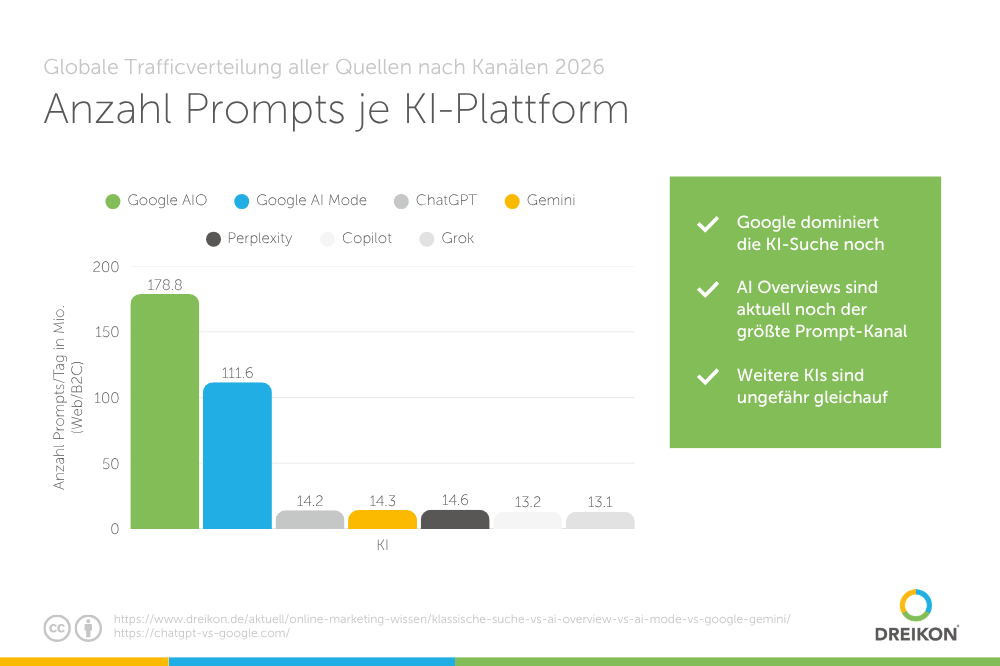
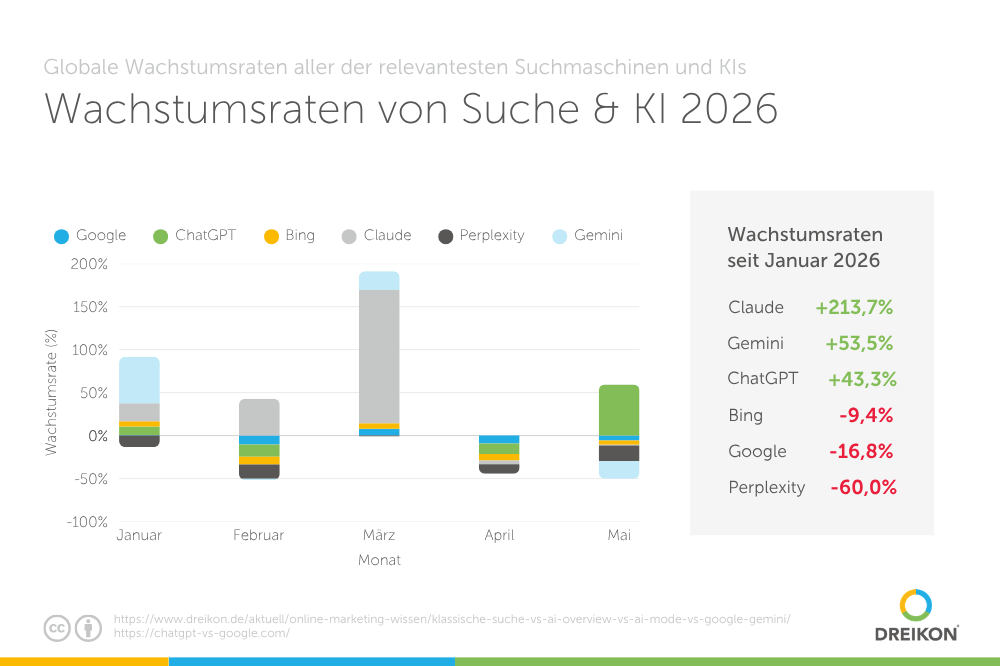
What will Google be capable of in 2026 compared to other AIs and search engines?
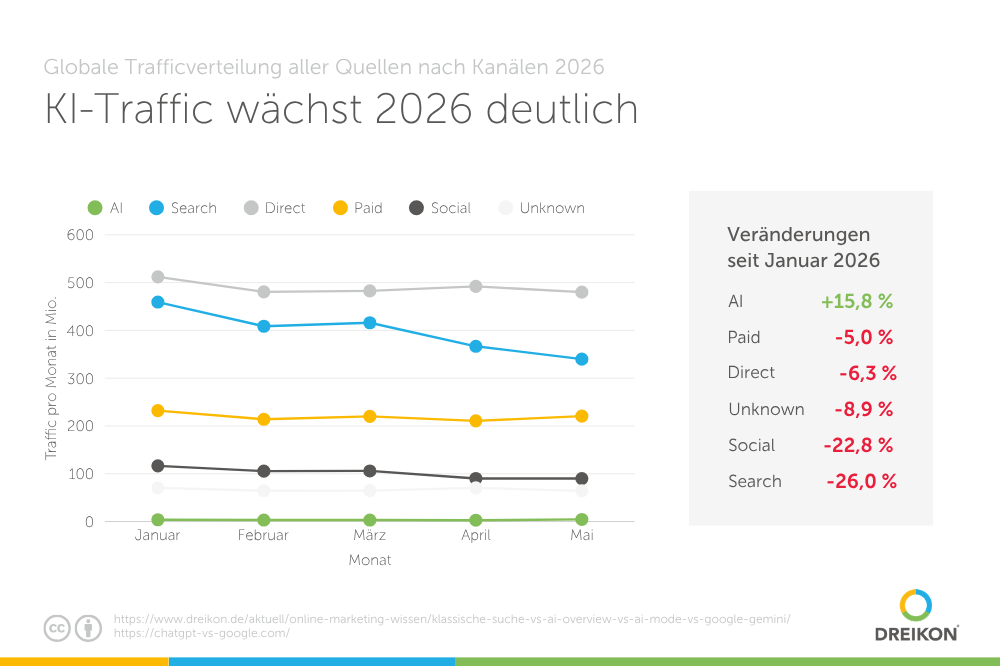
What does this mean for GEO and KI SEA?
This trend clearly shows that the future of digital visibility will not be exclusively organic or paid. Companies must consider both areas together. Currently, the best opportunities for visibility in AI-powered search environments are emerging primarily on the following platforms and combinations:
- Google Search & AI Overviews: a combination of SEO, GEO and Google Ads
- Google AI Mode: In future , a combination of GEO, organic visibility and new AI ad formats
- Perplexity: Visibility via GEO, as well as Sponsored Answers and sponsored recommendations
- Microsoft Copilot: A combination of Microsoft Advertising, SEO and AI-powered search experiences (AEO, GEO)
- ChatGPT, Gemini & Claude: Currently , visibility is primarily driven by SEO, GEO, brand strength and mentions as a source
It is therefore becoming increasingly important for businesses not only to optimise rankings or ad placements, but also to consider their overall visibility across traditional search engines and generative AI systems.
Visibility without adverts
Not all AI systems currently offer traditional ad formats. Whilst some platforms, such as ChatGPT, are already testing adverts in other countries, such as the USA, these formats are not yet available in Germany. For platforms such as ChatGPT, Google Gemini and Claude, organic visibility requirements are all the more important. Visibility is therefore currently achieved primarily through:
- strong SEO fundamentals
- GEO measures
- brand awareness
- digital authority
- mentions as a source in AI responses
A comparison of advertising options on Google, ChatGPT, Gemini, Perplexity and others
| Platform | Advertising Platform | Search Ads | Display/Banner Ads | Video Ads | Shopping/Product Ads | Sponsored AI Answers | Native Ads in AI Answers | Status |
|---|---|---|---|---|---|---|---|---|
Google Search | Google Ads | ✓ | ✓ | ✓ (YouTube) | ✓ | No | No | Established |
Google AI Overviews | Google Ads | ✓ | No | No | ✓ | Partial, currently showing Shopping and Search ads | ✓ | Already rolled out |
Google AI Mode | Google Ads | Planned / Partial | No | No | ✓ | ✓ | ✓ | Expanding |
Google Gemini | None currently | No | No | No | No | Not currently | Not currently | No advertising platform yet |
ChatGPT | None currently | No | No | No | Partial (shopping recommendations) | No | No | ChatGPT Ads currently being tested in the US (OpenAI is testing shopping recommendations and affiliate-like product placements; traditional ads are not currently available) |
Perplexity | Perplexity Ads / Sponsored Answers | No | No | No | No | ✓ | ✓ | Available |
Microsoft Copilot | Microsoft Ads | ✓ | ✓ | ✓ | ✓ | Partial | Partial | Expanding |
Claude | None currently | No | No | No | No | No | No | Ad-free |
AI advertising opportunities explained briefly
- Search adverts: e .g. traditional text adverts above the search results
- Shopping adverts: Product adverts with price and image
- Sponsored AI answers: AI answers containing a labelled advertising notice
- Native ads in AI responses: Product or brand recommendations within the response
- Display/banner adverts: Traditional advertising banners
- Video adverts: YouTube adverts or similar formats
Conclusion & Outlook
Google is in the midst of the biggest transformation in its history. With AI Overviews, AI Mode and Gemini , search is gradually evolving from a search engine into a system that not only finds information, but also evaluates, summarises and recommends it, and is increasingly helping to prepare decisions.
For businesses, this means that future visibility will no longer be determined solely by rankings and clicks. The question of whether a brand, product or company is even considered a relevant answer by AI systems is becoming increasingly important.
In a few years’ time, many users will be interacting with AI systems far more frequently than clicking through traditional search results. Anyone who continues to optimise solely for rankings will be fighting for visibility in a market that has long since moved on. The real challenge will be not just to be found, but to be understood, selected and recommended by Google platforms, ChatGPT, Gemini and the like.

The future belongs to companies that combine GEO and KI-SEA.
Every day, AI systems decide which brands are mentioned, recommended or ignored. At the same time, new advertising opportunities are emerging directly within generative responses. Anyone who fails to invest in GEO and AI-SEA today risks being invisible tomorrow at their target audience’s most important digital touchpoints.