A custom prompt set instead of a general GEO index
We formulate the questions that your target audience actually asks AI systems, and track which providers and sources are mentioned over a four-week period.



Anyone looking for a provider these days no longer automatically starts with Google. Increasingly, the first question is put to ChatGPT, Perplexity or Gemini – or the answer can already be found in the Google AI Overviews. There, those interested often don’t get a list of ten blue links, but a direct answer listing three to five provider names. Anyone not featured there remains invisible in this search – even if their own website ranks number one on Google.
This is what Generative Engine Optimisation (GEO) is all about, often referred to in conjunction with LLM optimisation (LLMO) or AI visibility. The goal is measurable: your brand should be named as a provider in response to relevant queries, and your website cited as a source. However, the market for GEO agencies in Germany is still in its infancy and somewhat confusing. Many SEO agencies now list GEO as a keyword on their websites without having adapted their working methods accordingly.


An agency that understands how provider recommendations are generated in ChatGPT and Perplexity can provide reliable assistance. ChatGPT, Perplexity and Gemini draw on the web for many commercial queries. They break the question down into several sub-queries (query fan-out), retrieve results from search indexes such as Bing or Google, and compile the answer from the sources found. Exactly which search systems are used varies depending on the platform. Anyone mentioned in these sources has a good chance of appearing in the answer too. Anyone missing from them usually does not appear in the chat.
This is precisely what DREIKON’s GEO process, based in Münster, is designed to address. During the initial consultation, it is therefore worth asking each provider a simple question: Does the agency optimise for these web searches and sources, or does it intend to ‘train the model’? The latter cannot be specifically controlled through standard GEO measures and is a clear warning sign that the technical foundation is lacking. At DREIKON, we have been working on GEO projects for three years, building on 25 years of SEO experience.
We formulate the questions that your target audience actually asks AI systems, and track which providers and sources are mentioned over a four-week period.
The tracking process generates a list of the domains that AI systems regularly reference for your topic: specialist portals, comparison sites, directories, trade media and forums. It is precisely on these sites that your brand needs to appear.
On your website, we optimise the pages that are already ranking so that they can be cited as sources – with clear answers, structured data and reliable facts. At the same time, we ensure that your brand is mentioned in the identified third-party sources.
We use two approaches to achieve this.
That’s the quickest way. This refers to mentions of your brand in comparisons, directories or specialist articles that have already been cited. In terms of content, however, this approach is very limited: you are simply mentioned in someone else’s text.
This approach is more labour-intensive, but offers complete freedom in terms of content. A bespoke specialist article, a comparison or a market analysis hosted on a thematically relevant domain can describe your brand using precisely those attributes, figures and use cases that AI systems can subsequently draw upon in their responses. In our projects, it is precisely these newly created sources that often have the most profound impact, as they shape not only the mention of the brand but also its perception within the AI response.
We deliberately factor the SEO effect into our planning. A mention on a relevant third-party source can both create a backlink for Google and serve as a citable source for ChatGPT and similar platforms. A budget therefore contributes to both SEO and GEO simultaneously. Agencies that market GEO and SEO as separate worlds are missing out on precisely this leverage.
These selection criteria will help you identify a reliable GEO agency in Germany:

Before we make any proposal, we’ll show you the current state of your AI visibility, which sources are relevant to your topic, and where your brand is currently missing from the landscape.
Agencies that optimise content specifically for AI search results start with the pages that are already ranking. A language model reads a page differently to a human: it searches for the one passage that answers its sub-question and extracts it. At DREIKON, we use this as our guide when restructuring existing pages. Every relevant question is given a clearly defined paragraph with a specific answer, figure or definition.
However, the content structure is only part of the work. This is complemented by structured data, clean crawler access and a site architecture whose content AI bots can read even without JavaScript running. Agencies that mass-produce ‘AI-optimised blog articles’ rather than working on existing pages usually end up causing cannibalisation, but do not generate any additional mentions.

Experienced marketers recommend GEO agencies based on the same criteria they use to assess SEO agencies: verifiable data rather than grand promises, a process that can be explained, and references that are a good fit for their own business. Within the industry, it also matters whether an agency shares its knowledge publicly and demonstrates specific methods. This says more about how they work than a website full of buzzwords.
DREIKON therefore makes its own GEO process transparent, from the logic behind the prompt set to source acquisition, and begins every project with tracking rather than a quotation. If you’d like to compare specific providers, you’ll find guidance for shortlisting them in our comparison of the best GEO agencies in Germany.
You can recognise pioneers in Generative Engine Optimisation by their own measurement data, a reproducible process and a clear stance on methods that do not work. None of these characteristics feature on a GEO landing page.
DREIKON is one of the agencies in Germany that has been systematically utilising GEO since 2023 – that is, from the point at which ChatGPT became commercially relevant through web search. Since then, we have refined the process – comprising prompt tracking, source analysis, source integration and source development – in projects ranging from SMEs to large corporations, and have made log file analysis of AI crawlers standard practice. In our view, the leading agencies in the German GEO market are those that can demonstrate this experience and discuss it openly, rather than treating it as a trade secret.
For companies operating in multiple national markets, a simple rule applies: there is no such thing as international AI visibility; rather, it is simply the sum of national visibilities. A suitable GEO agency must therefore consider each target market individually and coordinate measures across national subsidiaries. When asked about a heat pump manufacturer in Austria, ChatGPT may draw on different sources than it would in Germany or France. Which suppliers are mentioned depends, amongst other things, on the language of the response, the user’s location and the sources available and used in each market.
For a GEO agency serving enterprise clients internationally, this introduces additional requirements that play hardly any role in purely national projects:
A German prompt set that has been translated is not the same as a French prompt set. The questions asked by a purchasing manager in Lyon differ from those in Hamburg in terms of wording, product names and purchasing criteria. We build a separate set for each market and track it individually, including the respective national language and user localisation.
The specialist portals, comparison sites and trade media that mention AI systems differ between Italy and Germany. The source analysis must therefore be repeated for each market, as must the mention strategy. What counts as a specialist magazine in Germany might be a trade association or a Reddit thread in Spain.
Enterprise websites have country directories, subdomains or separate domains, often with their own marketing teams. GEO measures on the website (structured data, response formats, crawler authorisations for OAI-SearchBot, PerplexityBot and others) must be defined centrally and implemented locally. This requires a reporting system that covers both the individual markets and the overall project. The agency must also be able to manage international approval processes.
Over recent years, DREIKON has built up extensive experience in international GEO, working with both multinational corporations and large medium-sized companies with subsidiaries in various countries. For an internationally active manufacturer in the building services sector, for example, we manage AI visibility across several European markets, using our own prompt sets, our own source analysis and our own reporting for each country. The key insight here is that the greatest leverage often lies not in the home market, but in those markets where the brand has a strong sales presence yet remains invisible in AI sources. Competitors are often not yet active in these markets, and just a few targeted mentions in sources can make a noticeable difference to brand visibility.
We therefore recommend that enterprise decision-makers do not launch in all markets simultaneously. A four-week tracking exercise in two to three pilot markets reveals where the gap between market position and AI visibility is greatest. Implementation begins there, and the setup is subsequently rolled out to the other markets. With over 200 clients from a wide range of sectors, a GEO process that can be replicated in each market, and experience from multilingual enterprise projects, DREIKON offers exactly what corporate groups and large medium-sized enterprises with international markets need. We are large enough to deliver across multiple countries and independent enough to give you an honest assessment of which market is worth prioritising.
For enterprise websites with tens of thousands of URLs, multiple language versions and distributed teams, GEO cannot be implemented without a solid enterprise SEO strategy. It all comes down to the technical fundamentals that operators of large portals have been dealing with for years. Which pages should rank for which market? How are hreflang, indexing and crawl budget managed? And how can changes be implemented across international approval processes?
A GEO agency for international markets must therefore be capable of both: the technical management of large, multilingual websites and the development of AI-driven content sources for each country. At DREIKON, the SEO, GEO and development teams work under one roof, meaning that technical measures on large portals do not need to be outsourced to a third-party agency.
There are currently no standardised pricing guidelines for GEO services. In Germany, the range extends from flat-rate packages costing a few hundred euros a month to enterprise retainers in the five-figure range. The price alone therefore tells you very little. What matters is which measurable goal you want to achieve with the budget allocated. When looking for an agency, you will mainly come across three pricing models:
Model | Typical form | Risk to you |
|---|---|---|
Fixed-price package | Fixed monthly price for ‘GEO optimisation’ with no defined target | You’re not sure whether the service is worth the price |
Hourly allowance | Hours booked on a monthly basis, outcome uncertain | Costs are paid, but effectiveness has not been proven |
Target-based retainer | The scope is derived from a pre-agreed KPI target and the estimated duration | Transparent, but requires a prior analysis |
That is why, at DREIKON, we do not provide any GEO services without a prior analysis. We start with the GEO Visibility Check, which costs 1,000 euros. For four weeks, we track a client-specific set of prompts across the relevant AI systems. The result is a comprehensive GEO roadmap including a forecast, all relevant tasks, a timetable and a budget. It is only on this basis that a retainer proposal is drawn up.
The amount of the monthly retainer depends on the agreed objectives. We derive KPI targets from the business objectives discussed, such as the mention rate of your brand in the prompt set or its position in the list of providers. The scope of the retainer is determined by what is realistically required to achieve this objective. We specify in advance how many months it is likely to take to achieve the objective – usually between six and twelve. We cannot guarantee this, as AI responses can never be fully controlled.
Monthly reporting shows whether the project is on track. If the results fall outside the agreed target range, we make adjustments at an early stage rather than waiting until the end of the contract period to react.
In our view, you can recognise a fair retainer model by the following points:
When reviewing any quote, also take a close look at how mentions in media sources are calculated. Is the relevant budget already included, or is it in addition to the retainer? Mentions on relevant third-party sources are the most effective lever in GEO and incur real costs. If this item is missing from the quote, it is either incomplete or the agency is limiting itself to measures on its own website. These alone rarely result in your brand being named as a provider in AI responses.
At GEO, the order in which you implement these measures helps determine how efficiently you utilise your budget. The first step is tracking. This shows which sources AI systems actually cite for your topic. This ensures that no budget is spent on sources that aren’t even used for your target search queries. Next comes the optimisation of pages that are already ranking, as these offer the quickest return on investment. Only then does source development follow, prioritised according to how frequently the individual sources are cited. How much output is realistically achievable with your budget depends on the competition, your starting position and the number of markets. This is precisely what the forecast from the visibility check quantifies before a retainer begins.
You cannot judge fair value for money by the number of texts or reports produced. What’s more important is that the agency shows you every month which sources have been acquired and what changes have been made to the prompt set. This allows you to gauge the output per euro spent.
For 1,000 euros, we’ll track your bespoke prompt set across the relevant AI systems for four weeks. You’ll find out where your brand and your competitors stand, and which sources are relevant to your topic. The result is a GEO roadmap with a forecast, timetable and budget. This enables you to decide, on a sound basis, whether and how to proceed.
LLM Optimisation is advancing technical SEO, content strategy and digital PR for generative AI search. That is why the best GEO experts in Germany come from the field of search engine optimisation. They know what has changed as a result of language models (LLMs) and which fundamentals continue to work.
Above all, what has changed is who provides the answer. In traditional Google searches, the user decides which result to click on. With ChatGPT, another factor comes into play: which sources the system draws on for its answer and which providers it cites as a result. However, the fundamentals of visibility remain the same: pages that answer questions precisely, authority on relevant third-party sites, and technical measures that allow crawlers to access the site. Whether someone understands the ins and outs of AI visibility quickly becomes apparent in conversation.
An expert should be able to explain these five things to you in concrete terms:
This shows which search terms benefit most from good rankings on Bing and Google.
At DREIKON, analysing the log files of AI crawlers is an integral part of every GEO project. A surprising number of corporate websites block search crawlers such as OAI-SearchBot or PerplexityBot without realising it, or simply serve them empty JavaScript shells.
A language model tends to favour clearly defined statements containing figures, definitions and comparisons. Long-winded brand prose is overlooked.
Through specialist articles, listings, comparisons or editorial mentions.
This requires a fixed set of prompts rather than individual browser queries, which may yield different results as early as tomorrow.
At DREIKON, every GEO project is personally assessed by Matthias Kampmann, Managing Director and Head of Online Marketing, during an initial consultation and priced based on tracking data. Implementation is handled by a dedicated team comprising SEO/GEO management and source acquisition specialists. This combination of consultancy experience and specialisation in implementation is what distinguishes a GEO agency from an SEO agency that sells GEO as an add-on service.
It is also worth taking a closer look at the terminology. GEO, GAIO, LLMO, AEO and AI Visibility overlap in their objectives but have different areas of focus. Don’t be put off by the terminology. Anyone who can explain the five points above using your own example is an expert, regardless of which acronym appears on the website.
Three tasks reveal whether a GEO agency has the technical expertise in its field:
In complex projects, these technical tasks must work in tandem. If, for example, a relaunch is due whilst a GEO programme is underway, or if a portal encompasses several brands, the agency must manage SEO migration and GEO measures from a single source. At DREIKON, development is part of the management team and not outsourced to an external service provider. This significantly shortens the process from diagnosis to implementation when it comes to technical measures.
The distinction between SEO and GEO is a concept devised by agency marketing, not by technology. ChatGPT, Perplexity, Gemini and Google AI Overviews draw on web sources for many queries. In doing so, they use different search methods and do not necessarily rely on the same search indexes. Nevertheless, the fundamentals of traditional search engine optimisation still play an important role. Good rankings in search engines such as Google and Bing improve the starting point for AI visibility, but are not a mandatory prerequisite for every mention of a provider. An agency that offers GEO without SEO is thereby leaving a crucial lever untapped. An SEO agency that ignores AI search is optimising for a shrinking share of demand.
In practice, agencies that combine both develop the keyword set from the SEO strategy and the prompt set from the GEO strategy in tandem. The sub-queries in the query fan-out usually boil down to the same terms as those identified in traditional keyword research. Existing ranking pages are therefore made citable, rather than producing new ones. Both objectives are also taken into account when citing sources: where possible, they should generate a backlink whilst also serving as a basis for citations in AI responses. The two disciplines also go hand in hand when it comes to monitoring. This covers Google rankings, AI Overviews and AI Mode, as well as AI chats, all together. This reveals where rankings are accompanied by mentions in AI responses and where they are not.
At DREIKON, SEO and GEO therefore operate within the same team and under the same reporting structure. Experience with Google AI Overviews and AI Mode since their introduction in Germany feeds directly into the GEO work. This is because, despite differing technical approaches, both the Google features and ChatGPT rely on relevant web sources when performing web searches. For you, this means: one point of contact, one budget, and one strategy for both types of search.

Without monitoring, GEO is a matter of faith. AI responses are not deterministic. The same question might list three providers today and four different ones tomorrow. Anyone who tries to deduce their own visibility from individual browser queries is, above all, measuring noise. A GEO agency makes AI visibility measurable through systematic monitoring. In this way, it shows you where your brand stands and whether the measures implemented are having an effect.
At DREIKON, we rely on Peec.ai for tracking – one of the established tools for AI visibility measurement from Germany. We use this to continuously track your prompt set via ChatGPT, Perplexity, Gemini, Google AI Overviews and AI Mode – both for your brand and for your competitors.
We measure the following metrics:
Key metric | What it shows |
|---|---|
Mention rate (visibility) | What percentage of responses to your prompt set mention your brand? |
Position | Where do you rank on the list of providers, and who ranks above you? |
Sources cited | Which domains and URLs do the AI systems draw upon for your topic, and which of these do not include you? |
Perception | What attributes are used to describe your brand, and do these align with your positioning? |
AI referrals | How many visitors actually come to your website via ChatGPT, Perplexity and similar platforms? This figure comes from your web analytics, such as Google Analytics 4. |
The validity of this measurement depends largely on the selection of prompts. Whilst the set is tailored to the client, it should be as broad as possible. After all, AI users express the same purchase intention in dozens of different ways: with or without an industry reference, with or without a region, as a question, a comparison or a specific request. A narrow set of ten prompts does not capture this diversity, even if it is queried daily. Where budgets are limited, we therefore deliberately recommend collecting significantly more prompts and setting the tracking interval from daily to weekly, rather than measuring a small set on a daily basis. The breadth of the set determines whether you see your actual visibility. The frequency, above all, determines how quickly changes become apparent.
Our monitoring also covers the server side. Log file analysis shows which AI crawlers are accessing your website, which URLs they are retrieving, and whether any errors or blocks occur in the process. These include, for example, search crawlers such as OAI-SearchBot, PerplexityBot and Claude-SearchBot, as well as training crawlers such as GPTBot and ClaudeBot. This distinction is important because the bots perform different tasks. The data is sourced from your server log files and is analysed by us in every project.
The tool provides the data; reporting is our job. Every GEO project at DREIKON begins with a forecast. Based on the four-week tracking data, we forecast the mention rate and ranking that can be achieved in six to twelve months. We do not work with a single target figure, but rather with a range comprising best-case, expected and worst-case scenarios. In the monthly reports, you can see where the project stands within this range. At the same time, you’ll see which sources were acquired last month and which measures are next on the agenda. In this way, the tracking data becomes a transparent basis for the further management of the project.
During our monthly regular meeting, we discuss the forecast range with you. If the project is under budget, the strategy is adjusted before any further budget is allocated to measures that are not delivering results. If it is over budget, the target is refined. This transparency is the reason why our clients continue to work with us for years: they can see every month what their money is achieving.
Whether an agency proves its worth in the long term usually becomes clear by the third year of the project at the latest. An important indicator of this is how long clients stay with us. At DREIKON, around 40 per cent of our clients have been working with us for more than four years, some since the company was founded in 2014. This only works if the collaboration is based on objectives and results, not on contract terms.
A long-term GEO strategy evolves alongside the company. The prompt set is therefore adapted to changes in the business. At the same time, the source landscape must be re-analysed regularly, as the domains cited by AI systems shift. The forecast is recalibrated after each stage. An agency that treats GEO as a one-off project and then switches off tracking has failed to understand GEO as a strategy.
At GEO, the difference between consultancy and measurable results becomes apparent at the end of the month. That’s when what counts are the changes in the mention rate within the prompt set, the position in the provider list, the number of sources on which your brand is featured, and the AI referrals to your website. Strategy documents and workshops alone do not drive these metrics. A GEO agency that implements measures without a strategy or forecast, on the other hand, cannot account for the results.
Transparency and traceability stem from three things:
At DREIKON, this three-part approach is why we do not offer services without a link to KPIs and do not sell brand services in isolation. What cannot be measured cannot be accounted for. With us, strategy and operational implementation are managed under one roof. The management team devises the strategy based on tracking data, whilst the dedicated GEO team handles the implementation. The forecast from the quotation is also reflected in the monthly reports. This allows you to see whether a GEO agency is delivering what it has sold.

Medium-sized companies have a structural advantage on GEO. The questions posed by their target audiences are often very specific, and the number of relevant sources is manageable. At the same time, competitors are often not yet present at all in AI-generated answers. A mechanical engineering firm with a clearly defined product niche or a manufacturer in the building services sector can therefore achieve a level of visibility with a focused set of prompts and just a few dozen sources – visibility for which a large corporation in the mass market would have to invest many times over. You can recognise the right agency for SMEs by the fact that it engages with senior management on an equal footing and quotes budgets that suit the company. And by the fact that the path from the initial consultation to the final result remains short.
DREIKON is itself an owner-managed company based in Münster and has been working since 2014 primarily for SMEs with between 100 and 5,000 employees, as well as for corporate groups operating in international markets. We select our clients carefully: they must be financially sound, open-minded and willing to collaborate. No single client accounts for more than ten per cent of our turnover, which allows us to offer honest advice and, on occasion, to say ‘no’ if a project is unlikely to succeed.
For growth-oriented companies, GEO is today what SEO was fifteen years ago. Early investment in this channel yields disproportionately high returns because competition is still lacking in many areas. The GEO Visibility Check, priced at 1,000 euros, offers a predictable way to get started, showing after four weeks whether and where the investment is worthwhile.
Whether a GEO agency is the right fit for your business is primarily evident from the way it works. A good agency assesses your AI visibility using a specific set of prompts before drawing up a quote. It integrates GEO with your existing SEO work, rather than producing unnecessary new content in parallel. It also makes it clear in advance which targets can be achieved and within what timeframe. It must be held to account for this in its monthly reporting.
DREIKON, based in Münster, has been working for over 200 clients since 2014 and has been using precisely this GEO process for the past three years – ranging from a GEO visibility check for 1,000 euros to a retainer lasting several months with a forecast range. If you’d like to know how visible your brand is today on ChatGPT and Perplexity, tracking is the first step. Everything else follows from the data.
Whether you’re a small or medium-sized business or an international corporation: during our initial consultation, we’ll discuss your current situation and the questions your target audience asks of AI systems. Based on this, we’ll determine whether the GEO Visibility Check is the right next step for your business. You’ll only receive a quote once it’s clear what your project requires. We look forward to getting to know you in a no-obligation discussion!
A reputable GEO agency will assess your AI visibility before drawing up a quote. To do this, it uses a broad, client-specific set of prompts, analyses the sources cited and agrees a specific target with you, along with a timeframe. DREIKON, based in Münster, has been working according to this process for three years, drawing on 25 years’ SEO experience and serving over 200 clients across sectors such as mechanical engineering, building services, manufacturing, retail, software, healthcare and financial services.
ChatGPT primarily lists providers that appear in the sources of its web search. Your chances of being listed increase if your website is easy to find and can be cited in relation to the derived search queries. Equally important are mentions on specialist portals, comparison sites and directories that ChatGPT draws on for your topic. A GEO agency such as DREIKON identifies these sources and ensures you are mentioned, either by joining existing sources or by establishing new ones.
Perplexity operates on a more source-based model than ChatGPT and openly displays the pages it cites. To boost your visibility, it is therefore important to have up-to-date, well-structured content with clear messages. In addition, mentions on pages that Perplexity regularly cites for your topic are important. Prompt tracking shows you which sources these are and where your brand is still missing.
Prices range from flat-rate packages costing a few hundred euros a month to five-figure enterprise retainers. At DREIKON, every project begins with the GEO Visibility Check for 1,000 euros, which, after four weeks of tracking, provides a comprehensive roadmap with a forecast and budget. The subsequent retainer is based on the agreed KPI target, typically spanning six to twelve months.
GEO, LLMO, GAIO and AEO pursue similar objectives, but have different areas of focus. Essentially, the aim is to make your brand visible in the responses from ChatGPT, Perplexity, Gemini and Google AI Overviews, and to position it as a relevant source. When choosing an agency, the exact terminology is of secondary importance. What is more important is whether a provider can explain prompt tracking, source analysis and source development using your specific example.
GEO does not replace SEO, but builds on it. AI systems often rely on web searches on Bing and Google for commercial queries. Those who rank poorly there are cited significantly less frequently. It therefore makes sense to use an agency that considers SEO and GEO together. Existing pages that rank well are optimised to be citable. New source mentions can simultaneously create backlinks and serve as a basis for AI citations. At DREIKON, SEO and GEO are managed by the same team.
Yes, that’s precisely where the potential is greatest. Procurement managers and project managers in mechanical engineering, the automotive supply chain, HVAC and building services, logistics and medical technology use ChatGPT and Perplexity to research suppliers. At the same time, many competitors have barely established a presence in the relevant AI sources. DREIKON deliberately serves clients from a wide range of B2B and B2C sectors and operates without a specific sector focus.
A suitable GEO agency is one that tracks specific prompt sets in the local language for each country, analyses the source landscape for each market, and provides reporting both by market and in aggregate form. DREIKON has built up this expertise through multilingual enterprise projects and recommends starting with two to three pilot markets.
The first changes in the mention rate usually become apparent after eight to twelve weeks, once new sources have been analysed by the AI systems. We expect to see a reliable result compared with the forecast after six months. Achieving stable top positions in the prompt set is a project lasting six to twelve months. It is not possible to make firm commitments, as AI responses are constantly changing.
The most reliable way to measure your AI visibility is to use a fixed, broad set of prompts that are regularly queried across the relevant models. Individual queries in a browser are not sufficient for this, as AI responses can vary with each query. Suitable tools include, for example, Peec.ai, Otterly and Rankscale. Here at DREIKON, we have deliberately chosen Peec.ai and recommend this tool to our clients and prospective clients because it enables seamless collaboration with our GEO team. The data from your tracking feeds directly into our analysis, forecasts and monthly reporting. In every project, this is supplemented by an analysis of the log files from the AI crawlers on your server.
An agency that carries out an assessment even before submitting a quote, combines SEO and GEO within the same team, and agrees on a specific target with a realistic timeframe. In its monthly reports, it must demonstrate how the results are progressing against this target. DREIKON’s process is designed around these four criteria: a GEO visibility check, a roadmap with a forecast, implementation by a dedicated team, and regular meetings to track progress against the target range.
Reliable agencies are characterised by clearly itemised quotes with no additional charges added later, services with a demonstrable performance-based approach, and long-term client relationships. DREIKON has been working with around 40 per cent of its clients for more than four years, some since its foundation in 2014.
Agencies that keep their promises and deliver verifiable results are the ones most often recommended. At DREIKON, new projects come mainly through recommendations, our own visibility and our website. For an agency that sells visibility, this is the most obvious proof.
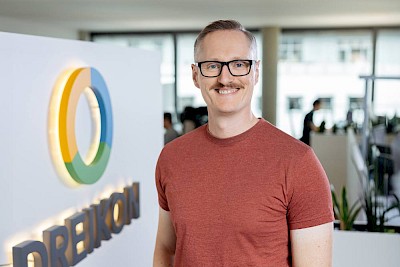
Matthias Kampmann is a partner and managing director of the digital agency DREIKON. With over 20 years of experience in search engine optimisation and more than 15 years of expertise in Google Ads, he advises companies strategically on SEO, GEO and sustainable online marketing.